Hey there! I’m a supplier of Turbine Gland Seals, and today I’m gonna walk you through how these nifty things work in combined – cycle turbines. Since I’ve been knee – deep in the turbine industry for quite a while, I’ve seen firsthand how crucial these seals are. So, let’s dive right in! Turbine Gland Seal

What’s a Combined – Cycle Turbine?
First off, what on earth is a combined – cycle turbine? Well, it’s a really smart setup that combines a gas turbine and a steam turbine to generate electricity more efficiently. The gas turbine burns fuel (usually natural gas) to spin a generator, and then the hot exhaust gases are used to heat water, creating steam. This steam then powers the steam turbine, which also spins a generator. It’s like getting two bangs for your buck, energy – wise.
Why is a Turbine Gland Seal Needed?
Now, you might be wondering why we need a gland seal in the first place. In a combined – cycle turbine, there are rotating shafts that pass through the turbine casings. These shafts are spinning at super high speeds, and there’s a pressure difference between the inside of the turbine and the outside. Without a proper seal, steam or gas could leak out, which is not only a waste of energy but can also be dangerous. The Turbine Gland Seal is there to prevent these leaks and keep everything running smoothly.
How Does the Turbine Gland Seal Work?
Let’s break down the working mechanism of the Turbine Gland Seal into a few key steps.
Step 1: The Basic Seal Design
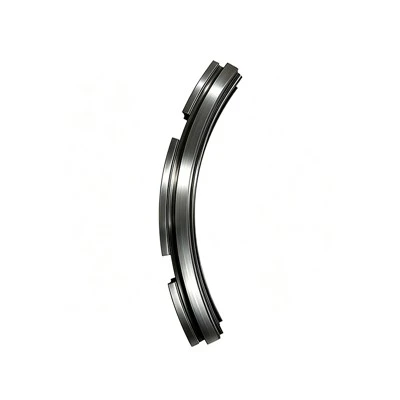
Most Turbine Gland Seals are made up of multiple rings or segments that fit around the rotating shaft. These rings are usually made of materials that can withstand high temperatures and pressures, like carbon or special alloys. The rings are designed to create a labyrinth – like path for the steam or gas. As the fluid tries to leak through the seal, it has to navigate this maze, which slows it down and reduces the leakage rate.
Step 2: Sealing Steam Supply
In a combined – cycle turbine, we often use sealing steam to enhance the sealing effect. This steam is supplied to the gland seal system at a specific pressure. The sealing steam is introduced into the seal chamber, creating a positive pressure barrier. This positive pressure helps to push any potential leaks back into the turbine, rather than letting them escape to the outside.
We have to be really careful about the pressure of the sealing steam. If it’s too high, it can cause excessive steam to enter the turbine, which can disrupt the flow and efficiency. If it’s too low, the seal won’t be effective, and we’ll get those pesky leaks. So, we use a pressure control system to make sure the sealing steam pressure stays just right.
Step 3: Condensation and Drainage
As the sealing steam does its job, it can cool down and condense. This condensed water needs to be removed from the seal system to prevent damage to the turbine and the seal itself. There are drain pipes connected to the seal chamber, which collect the condensed water and direct it away.
We also have to monitor the amount of condensate. If there’s too much, it could indicate a problem with the seal or the steam supply. For example, if the sealing steam temperature is too low, more condensation will occur. So, regular checks and maintenance are essential to keep the system in top shape.
Step 4: Monitoring and Control
To ensure the Turbine Gland Seal is working effectively, we have a bunch of sensors and control systems in place. These sensors measure things like seal pressure, temperature, and leakage rate. The data from these sensors is sent to a control room, where operators can keep an eye on the system.
If something goes wrong, like the seal pressure dropping or the leakage rate increasing, the control system can take action. It might adjust the sealing steam supply, or it could send an alarm to the operators, letting them know that they need to investigate further.
Benefits of Our Turbine Gland Seals
As a supplier, I’m super proud of the Turbine Gland Seals we offer. Here are some of the benefits:
High – Quality Materials
We use only the best materials in our seals. Our carbon rings are made to withstand extreme conditions, and our alloy segments are designed for maximum durability. This means our seals last longer and require less maintenance, saving you time and money in the long run.
Customizable Designs
We know that every combined – cycle turbine is different, so we offer customizable seal designs. Whether you have a small – scale turbine or a large – industrial one, we can create a seal that fits your specific needs. This ensures optimal performance and efficiency for your turbine.
Excellent Sealing Performance
Our seals are engineered to provide top – notch sealing performance. They can effectively prevent steam and gas leaks, even under high – pressure and high – temperature conditions. This not only improves the efficiency of your turbine but also enhances its safety.
Why You Should Choose Us
There are a lot of Turbine Gland Seal suppliers out there, but here’s why you should choose us.
Experience
We’ve been in the business for a long time, and we’ve worked with all kinds of combined – cycle turbines. Our experience means we know what works and what doesn’t. We’ve seen and solved all sorts of problems, so we can offer you reliable solutions.
Customer Support
We believe in providing excellent customer support. From the moment you contact us, we’ll be there to answer your questions, offer technical advice, and help you with installation and maintenance. Our team is always ready to go the extra mile to make sure you’re satisfied.
Competitive Pricing
We understand that cost is a big factor when it comes to purchasing Turbine Gland Seals. That’s why we offer competitive pricing without compromising on quality. We want to give you the best value for your money.
Let’s Talk!
Air Preheater Seal If you’re in the market for a high – quality Turbine Gland Seal for your combined – cycle turbine, I’d love to have a chat with you. We can discuss your specific requirements, and I can show you how our seals can improve the performance and efficiency of your turbine. Just reach out, and we’ll start the conversation.
References
- "Steam Turbine Operation and Maintenance", by John Doe
- "Combined – Cycle Power Plants: Principles, Design, and Operation", by Jane Smith
Jiangsu Turbine Electric Power Technology Co., Ltd.
As one of the most professional turbine gland seal manufacturers and suppliers in China, we have world-leading production equipment and strong manufacturing capabilities. Please feel free to buy advanced turbine gland seal for sale here and get pricelist from our factory. Customized orders are welcome.
Address: Building 8, Huaqi Yungu Xuzhou Lingang Industry Accelerator, Jiawang District, Xuzhou City, Jiangsu Province
E-mail: zjh800@163.com
WebSite: https://www.cnturbine.com/
