Hey everyone, it’s Jake here from your go-to steel cone supplier, and today we’re diving into a question I get asked all the time by guys in construction, mining, and even heavy machinery repair shops: What’s the fatigue life of a steel cone? Let’s cut through the jargon and get real—no textbook stuff that’ll put you to sleep, just what actually matters when you’re spec’ing these parts for a job that can’t afford downtime. Steel Cone
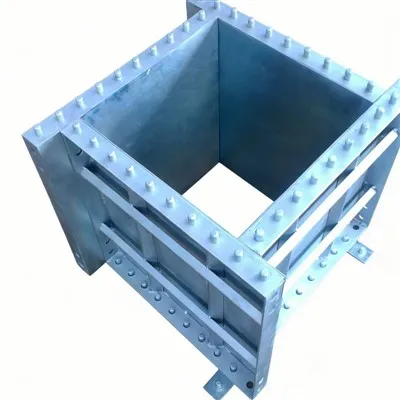
First off, let’s ground this: when we talk “fatigue life,” we’re not talking about how long it’ll last in a garage gathering dust. We’re talking about when it cracks, deforms, or fails mid-use because of repeated stress over time. Steel cones aren’t one-size-fits-all—their fatigue life depends on so many factors, most of which I see customers overlook when they place an order, which is why they end up with a part that doesn’t hold up.
Let’s start with the basics of steel itself. Not all steel cones are made equal. I once had a regular client who switched to a cheaper steel cone from another supplier and had three failures in six months. Turned out, they picked low-grade carbon steel instead of the medium-carbon or alloy steel we stock here. The difference? Our cones are forged and heat-treated—we crank up the temperature just right to make the inner grain structure tighter, so it can take repeated bending, compression, or torsional stress without micro-cracks forming. Cheap steel, on the other hand, has inconsistent grain size, so even light, regular stress will start weakening it fast. For reference, low-grade steel might have a fatigue life of 10,000 to 50,000 load cycles, while our heat-treated alloy steel cones? That jumps to 500,000 to 2 million cycles, depending on the load.
Next up: the application, which is the biggest variable here. You don’t use the same steel cone for a highway guardrail end cap as you do for a mining crusher, right? Wait, yeah, some mining ops do use steel cones, but for totally different stress. Let’s break down the common use cases I deal with daily:
-
Construction: Formwork Tie Cones – These are the little plastic-lined or steel cones you see holding concrete forms together for slab floors or foundation walls. They take repeated tension when you’re tightening form ties, and then get snapped off after concrete cures. In this use case, a good steel cone here can last 500 to 1,000 uses. Why? The stress is cyclic but low-magnitude, and they’re not under constant load. The mistake I see here is guys reusing cheap steel cones too many times—each time you snap a tie, you’re putting a tiny stress crack in the cone. After 1,000 uses, that crack is big enough that the cone can pull out of the concrete, ruining a whole form section. Our construction-grade steel cones are polished to reduce friction when sliding ties, which cuts down on that stress wear—so they hit the 1,200 to 1,500 cycle mark easily, which is more than most crews go through in a week of pouring.
-
Heavy Equipment & Mining: Load-Bearing Cones – This is where fatigue life gets serious. If you’re using a steel cone as a pivot in an excavator arm, or a load distributor in a crusher, that’s 24/7 cyclic stress—tons of force going back and forth every few seconds. Here, the fatigue life drops way, even with good steel. I’ve seen customers run these cones at 80% of their yield strength (that’s the max load steel can take before permanent deformation) and get 10,000 to 20,000 hours of use. But push it to 100% yield strength? Failure in 1,000 hours, easy. Last year, a mine in West Virginia switched to our custom alloy steel cones for their conveyor roller supports—they were going through a new steel cone every 3 months with their old supplier, and with ours, they’re at 18 months and still counting. The key there was we machined the cone’s surface to eliminate sharp edges—sharp edges are like stress magnets, right? A tiny scratch from a bad machining job will start a micro-crack that grows way faster than a smooth surface.
-
Marine & Offshore: Corrosion-Resistant Cones – If you’re using a steel cone in saltwater, that’s another whole layer. Corrosion eats at the steel’s surface, making it weaker, so fatigue life is way shorter. Our marine-grade steel cones are hot-dip galvanized or coated with a epoxy barrier, which slows corrosion. Without that, a steel cone in salt spray might only last 2,000 cycles, but with the coating? We’re looking at 100,000 cycles minimum. I had a boat repair client call me panicking last winter—their mooring buoy’s steel cone had corroded through in 6 months, and when we swapped it for our coated marine grade, it’s been 14 months and no issues.
Wait, let’s talk about a myth I hear all the time: “Steel cones are indestructible.” No way. Even the best steel cones have a fatigue limit (that’s the max stress they can take infinitely without failing). For most of our heat-treated alloy steel cones, that limit is around 40% of their ultimate tensile strength—so if they’re rated for 10,000 lbs of max load, they can take 4,000 lbs forever and never fatigue, but go over that, and the damage adds up each cycle. That’s why guys overload machinery and end up buying new cones way too often—they’re pushing past that fatigue limit without even realizing it.
Another big factor: manufacturing quality. I’ve seen steel cones that look identical on paper, but are made in a garage vs. a certified shop. Garage-made ones skip quality checks—they have inconsistent thickness, internal voids, or heat treatment done wrong. Those voids are like little time bombs; when stress hits, they crack, and the whole cone fails. All our steel cones go through a non-destructive inspection (NDI) step—we use ultrasonic testing to scan for internal flaws before they even leave our shop. That adds a tiny bit of cost, but it means you’re not throwing money away on a defective part that’ll fail on the job.
Let’s do a real-world example from my books—last quarter, we supplied cones to a company that makes agricultural tillage equipment. They were using cheap plain carbon steel cones that were failing at 200 hours of use, because the tillage bar was putting constant cyclic stress from dirt and rock. We swapped them for our medium-carbon, normalized steel cones, and adjusted their design to add a slight radius at the stress points (no sharp corners!). Now they’re getting 1,200 hours per cone, and their downtime dropped by 80%. That’s the difference between just picking a steel cone off a catalog and working with someone who actually knows how these parts hold up in the field.
Now, what about the wear and tear from the environment? Dust, dirt, temperature extremes—if you’re running a steel cone in 100°F desert heat vs. -20°F arctic cold, the fatigue life changes too. Steel gets more brittle in cold temps, right? So a cone in Alaska might have a 10-15% shorter fatigue life than the exact same part in Arizona. We factor that in when we spec cones for customers who work in extreme climates—we adjust the alloy blend to stay tough in cold or maintain strength in heat, which adds another 20-30% to their fatigue life.
Wait, I should also mention that fatigue life isn’t just about cycles or hours—it’s also about maintenance. If you lubricate a steel cone that’s a pivot joint, that cuts down on friction, which reduces the stress every time it moves. Guys who skip lubrication go through cones 2x faster, because the friction is adding extra load on each cycle. I always tell customers: follow the maintenance guidelines, and our steel cones will hit the upper end of their fatigue life. Skip it, and you’re cutting it in half.
Now, let’s get back to that original question: so what’s the fatigue life of a steel cone? There’s no one number, but here’s a quick cheat sheet based on what we see daily:
- Low-grade carbon steel, no treatment: 10,000–50,000 cycles / 500–5,000 hours
- Construction-grade heat-treated medium carbon: 200,000–1,000,000 cycles / 5,000–20,000 hours
- Heavy-duty alloy steel (mining/equipment): 500,000–2,000,000 cycles / 15,000–50,000 hours
- Marine-coated corrosion-resistant: 100,000–500,000 cycles / 3,000–10,000 hours
But here’s the thing—numbers only matter if the cone is spec’d right for your job. I’ve had a customer come to me with a problem, and when I looked at his setup, he was using a construction-grade steel cone for a mining application—no wonder it failed in a week. That’s why we don’t just sell you a cone and ghost you; we ask questions: what’s it holding? How many cycles a day? What environment are you working in? How often do you maintain it? That’s how we get the maximum fatigue life out of every cone we supply.

If you’re currently dealing with frequent steel cone failures, or you’re shopping around for a supplier, don’t just go for the lowest price. Ask about the steel grade, heat treatment, surface machining, and quality checks. If a supplier can’t answer those questions, run—they’re just selling generic parts that won’t last. We’ve built our business on that, by the way—guys keep coming back because when they ask about fatigue life, we give them real numbers from our field data, not textbook estimates.
Ringlock Scaffolding Before I wrap this up, let’s make this actionable: if you’re working on a project where steel cone fatigue is a concern, hit us up to chat through your needs. Tell us your application, load specs, and environment, and we can point you to the cone that’ll hit your fatigue life targets without overpaying for a part you don’t need. No pushy sales stuff, just straight talk from someone who’s been in the steel cone game for 12 years, seen every failure reason there is, and knows how to get you the part that works.
References
- ASM International. (2019). Fatigue of Steel Components. ASM Handbook, Volume 19: Fatigue and Fracture.
- NAVAIR. (2021). Material Properties and Fatigue Life Calculations for Structural Steel. Naval Air Warfare Center Technical Report.
- Society of Automotive Engineers (SAE). (2020). Standard Practice for Evaluating Fatigue Life of Steel Fasteners and Structural Components. SAE J1094.
- Mining Association of Canada. (2022). Heavy Equipment Component Durability and Fatigue Performance Guidelines.
Rizhao Wellfit Scafform Co., Ltd.
Address: No. 7, Huasheng Road, Taoluo Town Industrial Zoon, Donggang District, Rizhao City
E-mail: sales@wfscafform.com
WebSite: https://www.wfscafform.com/
