If you’ve ever hosted a backyard BBQ that quickly ballooned from 4 guests to 12, or moved into a new apartment where your dining nook feels too small for weekly game nights, you’ve probably stared at an extendable table and thought, This could work—if it fit exactly. As the owner of an extendable table supplier who’s fielded this exact question a hundred times a week, I’m here to break down what customization for these tables actually looks like—no vague sales jargon, just real answers from someone who’s built (and repaired) more of these tables than I can count. Extendable Tables
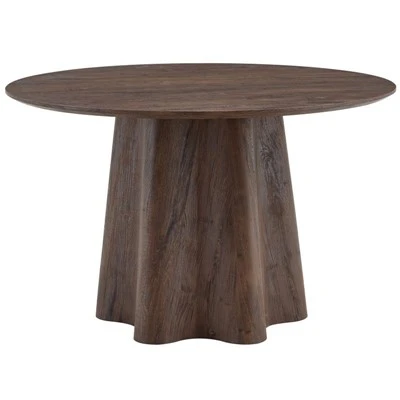
First, let’s get one thing straight: the short answer is yes. But let’s not stop at “yes.” Let’s talk about what that means, because not all “custom” extendable tables are created equal. I’ve seen customers leave generic furniture stores frustrated because the “custom” option they were sold was just a 2-inch tweak to a standard tabletop—hardly enough to make their space feel uniquely theirs. At my company, we’ve spent 12 years refining our customization process to eliminate that gap, and today I’m pulling back the curtain on exactly what you can adjust, how it works, and what to watch for when you’re shopping for a custom extendable table.
The Core Customizations That Actually Matter (Not Just Cosmetic Flourishes)
When most people ask to customize an extendable table, they’re usually thinking of two big needs: fitting their space perfectly and matching their existing decor. But the best custom tables address both without sacrificing the extendable mechanism—because a table that won’t extend when you need it is just a fancy fixed table, and we’ve built our entire business on making sure that mechanism stays reliable even when we tinker with it.
Let’s start with size, because that’s the non-negotiable for most people. Standard extendable tables come in a handful of fixed dimensions: a closed length that fits a small dining area, and an extended length that works for large gatherings. But what if your dining space is 72 inches wide, not the 60 or 78 inches most companies sell? Or what if you need to extend to exactly 96 inches, not 90 or 102? That’s the sweet spot of our size customization. We adjust both the closed and extended lengths to fit your space, and the key here is that we don’t cut corners on the sliders or the extension mechanism. Our engineers design every custom table’s hardware to match the exact weight and length of the tabletop, so it glides open and closed just as smoothly as a standard table—no sticking, no wobbly edges.
A few years back, we had a customer in Seattle who lived in a 550-square-foot apartment. She had a tiny dining nook that measured just 48 inches wide when closed, but she needed to fit 10 people for her annual Thanksgiving dinner. Off-the-shelf extendable tables closed to 54 inches at the smallest, so she was stuck either cramming guests or buying a table too big for her daily use. We built her a custom table that closed to exactly 47 inches (we shaved the edge trim just enough to make it fit her nook, without weakening the tabletop) and extended to 92 inches. She told us later that it fit perfectly, and her guests never guessed it wasn’t a standard model. That’s the kind of customization we’re talking about—solving real space problems, not just picking a different tablecloth.
Next, materials. This is where a lot of suppliers limit you. If you want a wooden extendable table, they might only offer 3 or 4 wood species; if you want metal, maybe 2 finishes. But our customers come to us with every kind of request, from reclaimed barn wood they already own, to a metal finish that matches their living room accent wall. We work with oak, walnut, maple, cherry, reclaimed pine, and even exotic woods like teak for outdoor use. For metal frames, we have 12 powder coat finishes, from matte black to soft white, brushed nickel to bronze. We even work with quartz and concrete tabletops for customers who want something less traditional.
Last year, a customer in Austin contacted us with a very specific request: he had a vintage mid-century modern dining set with a walnut table base he couldn’t bear to replace, but it only fit a 60-inch tabletop. He needed to extend it to 84 inches, but couldn’t find a standard tabletop that matched the exact grain of his existing table. We sourced a matching walnut slab milled from the same batch of wood as his original table, cut it to the exact dimensions he needed, and built an extension mechanism that attached to his existing base. He sent us a photo six months later, and it looked like the table had always been that size—no sign it was custom. That’s the value of working with a supplier that doesn’t force you to choose between your existing pieces and a functional extendable table.
Then there are the small, details that make a big difference: edge profiles, for example. Most standard tables have straight edges or gently rounded edges, but if you want a beveled edge, a shiplap edge, or even a carved edge to match your home’s trim, we can do that. We also adjust the height of the table if you need something extra-tall for bar seating, or shorter for a breakfast nook. For customers with kids, we can round all the edges for safety, or build in a hidden storage compartment for placemats or cutlery in one of the extension leaves—something standard tables almost never have.
What Customization Can’t Do (And What To Avoid)
I wish I could say we can adjust every part of an extendable table, but there are a few limits, and it’s important to be upfront about them. For example, you can’t cut a table to be smaller than the mechanism itself. Every extendable table has a minimum length it can close to—think of it like a folding chair: you can’t fold it smaller than the width of the legs. If your space is extra-tight, our team will help you work around that with slim profile bases or wall-mounted tables that extend outward, but we won’t promise something that’s physically impossible.
Another thing to watch out for: suppliers that offer “custom” tables but outsource the work to overseas factories with no quality control. A few years back, we had a customer come to us after buying a “custom” table from a big-box store online. The table was advertised as able to extend to 108 inches, but when it arrived, the mechanism was flimsy, and the tabletop warped after three months. The “customization” only changed the tabletop’s color, and the hardware was standard, so it didn’t hold up. At our company, every custom table is built in our workshop in Michigan, by our own craftspeople, and we test every extension mechanism three times before it leaves the building. We offer a 10-year warranty on all our extendable tables, including custom ones, because we stand behind that build.
Also, don’t fall for suppliers that charge exorbitant fees for “customization” that’s just standard options. We price our customization fairly: for a size tweak, it’s usually a 15% surcharge, and for material changes, it’s the difference in the cost of the wood or metal. No hidden fees, no surprise charges. Our goal is to make a table that works for your life, not to nickel and dime you for small adjustments.
Real Customer Stories: Custom Extendable Tables That Changed Lives
I don’t just talk about customization—I see it work every day. Last year, a customer named Maria from Chicago contacted us. She was a teacher who hosted her whole extended family for Christmas every year, and her old extendable table only fit 6 people comfortably. When her sister announced she was bringing her new partner and their baby, plus a cousin from out of town, Maria needed a table that could fit 10, but her dining area was only 72 inches wide when closed. A standard table closed to 60 inches would make her nook feel cramped for daily use, but she couldn’t fit a larger table permanently.
We built her a custom table that closed to exactly 58 inches (thin enough to fit her nook without feeling tight) and extended to 96 inches. We added a hidden storage tray in one of the extension leaves for baby toys and placemats, and we used a soft walnut finish that matched her existing hutch. When she picked it up, she cried—she’d been stressing about the holidays for months, and suddenly she had a table that worked for both her daily routine and big gatherings. She sent us a photo after Christmas, with 11 people squeezed around the table (they moved a side chair in for the baby) and it looked perfect. That’s why we do this.
Another story: a customer named Mike in Dallas who needed an outdoor extendable table for his patio. His patio was 120 inches long, and he wanted a table that could fit 8 people for summer BBQs, but when the weather was cool and he only had 2 people, he wanted something smaller so he could lounge around a fire pit area. Standard outdoor extendable tables are bulky and heavy, hard to move around the patio. We built him a custom aluminum frame (light enough to move alone) with a teak tabletop that closed to 60 inches and extended to 90 inches. We also added a built-in hole for an umbrella, which most standard outdoor tables don’t have. He told us last summer that he uses it every weekend, and it’s the perfect size for his space.
How To Get Started With Your Custom Extendable Table
If you’re ready to take the plunge and customize your own extendable table, the process is simpler than you might think. First, measure your space carefully—write down the exact dimensions of your dining area (from wall to wall, including any doorways or fixtures that might get in the way) and note how many people you usually need to seat, plus how many you might need for special occasions. That gives our team a clear starting point.
Next, look for a supplier that communicates clearly. Avoid anyone who gives you vague answers, or won’t show photos of their workshop or their previous custom work. We always send our customers 3D renderings of their custom table before we build it, so you can see exactly what it will look like—no surprises. We also work with you every step of the way: if you love a certain wood grain, we can send you samples. If you want to tweak the edge profile, we can adjust it until it’s exactly what you want.
At the end of the day, an extendable table is supposed to adapt to your life, not the other way around. It’s for the nights when your family brings extra guests, for the weekends when you host a game night with friends, for the small daily moments when you just need a table that fits your space, not the other way around. Customization isn’t a luxury—it’s making a piece of furniture that works for you.
Coffee Tables If you’re ready to talk through your own needs, from fitting a tight dining nook to matching a vintage base or picking the perfect material for your space, we’d love to help. Reach out to our team to start designing your custom extendable table, and let’s build something that works for your life, not just a generic model off a shelf.
References
- National Kitchen & Bath Association. (2022). Space Planning Guidelines for Residential Furniture.
- Woodwork Institute. (2021). Custom Furniture Design and Construction Standards.
- Outdoor Industry Association. (2023). Guide to Functional Outdoor Furniture for Residential Spaces.
Furnishion (Tianjin) International Co., Ltd.
Furnishion (Tianjin) International Co., Ltd. is one of the most experienced extendable tables manufacturers and suppliers in China. With a professional production team, we are able to meet the needs of the majority of our customers. Please feel free to wholesale high quality extendable tables at competitive price from our factory.
Address: Room 2501, West Tower, Unit 1, Jinta Apartment, 162 Zhang Zizhong Road, Heping District, Tianjin, China
E-mail: export@furnishion.com
WebSite: https://www.furnishion.com/
